Free Things To Do Near Las Ramblas
What is genuinely free around La Rambla, from the squares and market halls to the walking tours that start on its doorstep, and what still costs money nearby.
In Short
La Rambla is free public space, and so are the squares that sit just off it: Plaça de Catalunya, Plaça Reial and Plaça del Pi. The Boqueria market is free to walk through, and 46 free walking tours on GuruWalk cover the streets around it. The paid parts are the sights with interiors and viewpoints, and several sit minutes away.
This question sits inside the free walking tours in Barcelona guide.
Quick Facts
| Question | Answer |
|---|---|
| Is La Rambla itself free? | Yes, it is free public space, like any street |
| Is the Boqueria free to enter? | Yes, you pay only for what you buy |
| Are the squares free? | Yes, Plaça de Catalunya, Plaça Reial and Plaça del Pi are free public space |
| Are free walks available from here? | Yes, 46 free walking tours on GuruWalk, several meeting at Plaça de Catalunya or on La Rambla itself |
| What still costs money? | Cathedral tourist visit, Santa Maria del Mar cultural visit, and other ticketed interiors nearby |
| Free walks platform | GuruWalk, every walk free, pay what you want |
Free Things To Do Near Las Ramblas
La Rambla and everything immediately around it breaks into three free layers: the street itself as free public space, the squares and market halls that branch off it, and a dense cluster of free pay-what-you-want walking tours that use La Rambla and Plaça de Catalunya as meeting points. Paid attractions sit within reach but are separate, and knowing the line between the two is the whole trick of the area.
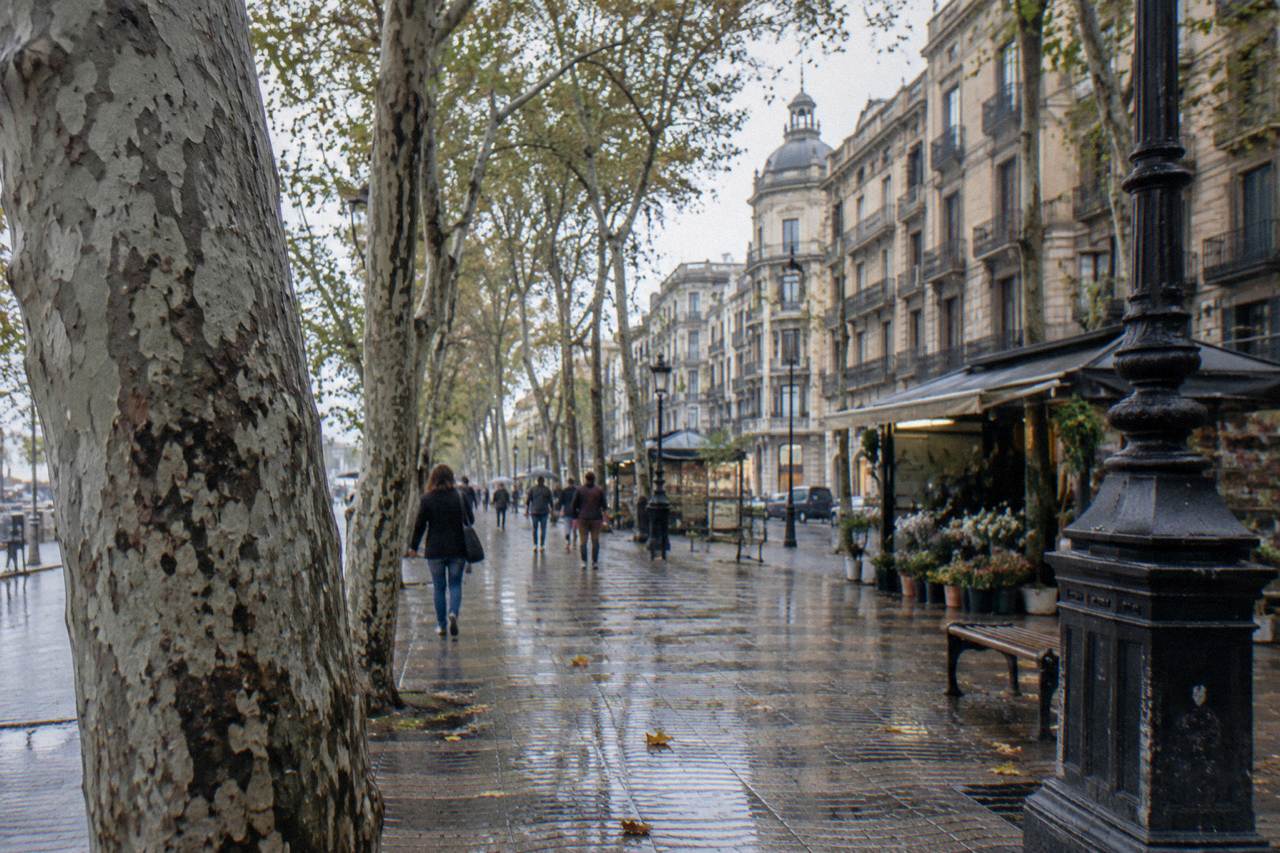
La Rambla is a street. That sounds obvious, but it matters, because the single most common planning mistake in central Barcelona is treating the promenade as an attraction with a ticket, a queue or a schedule attached. It has none of those. It is free public space, open like any street, and the plane trees, the facades on either side and the human traffic along it are all there without payment.
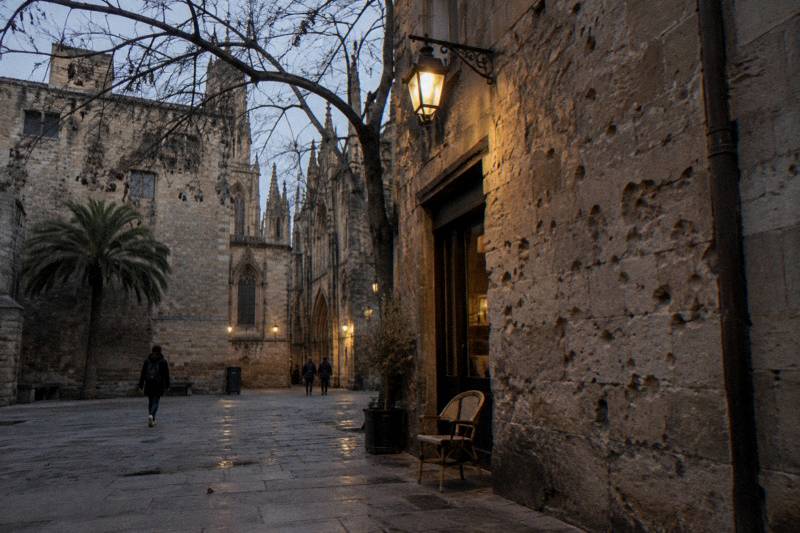
The interesting part starts at its edges. Walk off La Rambla to the east and you are in the Barri Gòtic within a couple of blocks; walk off it to the west and you drop into the Raval. Both neighbourhoods are free to wander, both are covered by free walking tours on GuruWalk, and both hold squares that cost nothing to sit in. The promenade is the spine, and the free things hang off it.
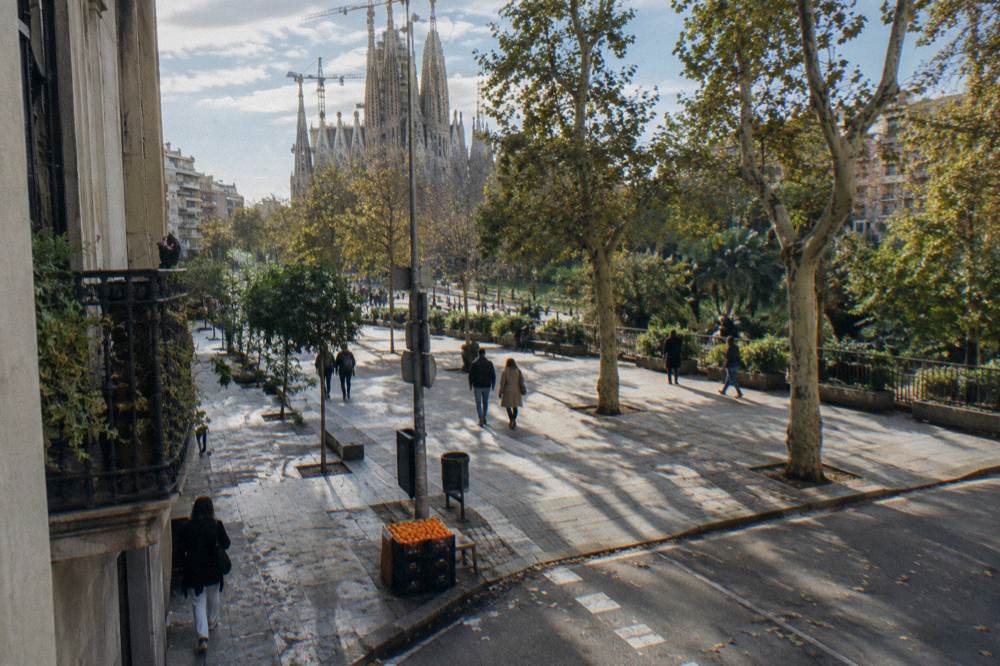
The third layer is the walking tours. Several of the 46 free, pay what you want walking tours on GuruWalk in Barcelona start at the top or bottom of La Rambla: Plaça de Catalunya is a recurring meeting point, and some walks name La Rambla, Canaletes as their start. The Ramblas to Gaudí Highlights walk, rated 4.91 out of 5 across 4,761 GuruWalk reviews, meets at Plaça de Catalunya, runs 2 hours 15 minutes in English and Spanish, and is free to join. Its GuruWalk page flags costs beyond the tip, for example an entry ticket inside the walk, and that page carries the details. You can see it at Ramblas to Gaudí Highlights on this site.
If you want a feel for the range of free walks that gather around this part of the city, these three are a fair cross-section: an old town and El Born introduction, a night-time Gothic Quarter walk, and a Gothic Quarter tour that uses augmented reality.
All three run on GuruWalk, all are free with pay what you want, and all meet at or near the streets that frame La Rambla. Between them and the street itself, a full day around the promenade can be spent without a single ticket.
What Can You See On La Rambla For Free?
Everything visible from the promenade itself is free: the street as public space, the building facades along it, the ground-floor market halls with their entrances open to the street, and the side streets that peel off into the Barri Gòtic and the Raval. La Rambla has no gate, no ticket and no closing time as a street. The paid items nearby are interiors and viewpoints, none of them part of the promenade itself.
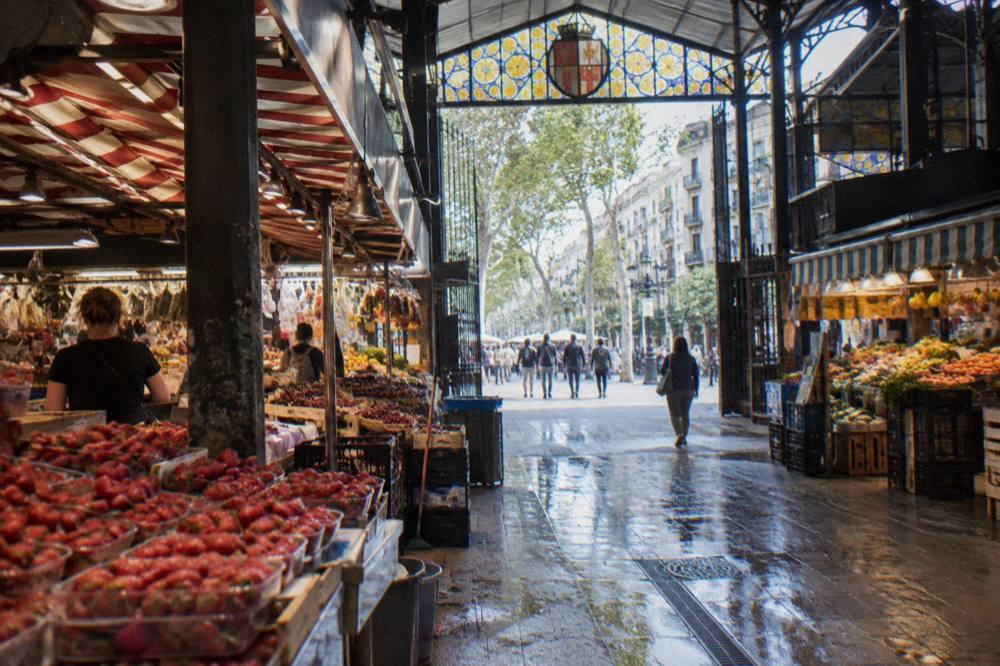
The promenade runs from Plaça de Catalunya down to the waterfront, and the whole length is free public space. The Boqueria market, Mercat de la Boqueria, sits directly on it, and markets in Barcelona are free to walk through: you pay only for what you buy. That is the standing rule for the city's markets, and it means the market hall itself, the fish counters, the fruit stalls and the whole working interior are open to anyone walking in. The Barcelona markets guide covers how the other markets, including Sant Antoni and Santa Caterina, work the same way.
The side streets are where the free depth sits. East of La Rambla is the Barri Gòtic, the Gothic Quarter, which is a neighbourhood of free public streets and squares; the question of whether it is free to walk is answered plainly in is the Gothic Quarter free to walk. West is the Raval, also free public space, and covered by its own set of GuruWalk walks in the Raval, Poble-sec and hidden barrios category.
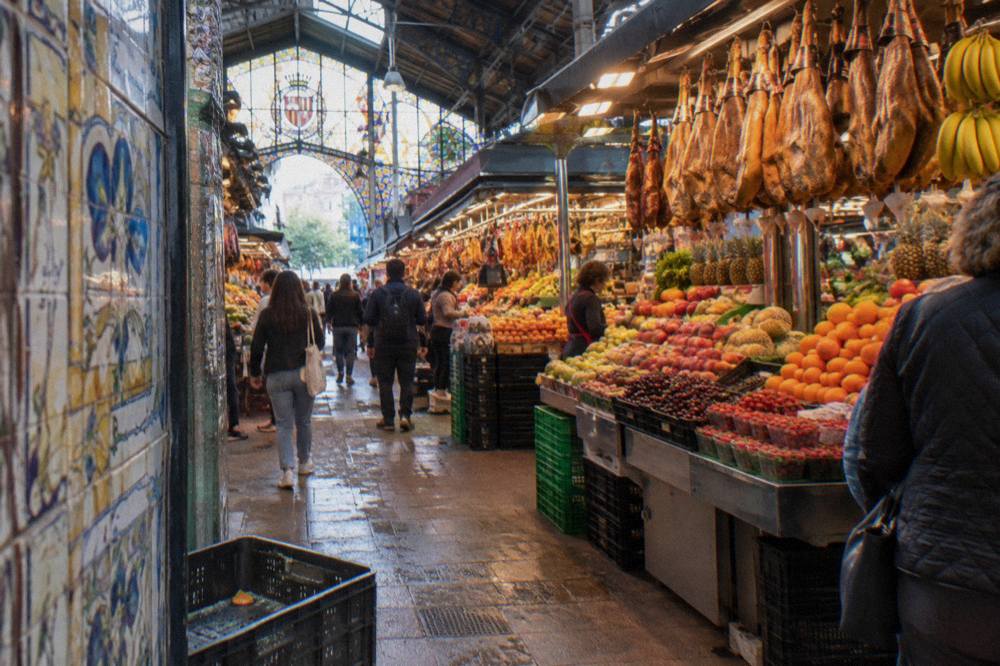
The Gothic Quarter and Born Free Tour is the most-reviewed walk listed here: 4.91 out of 5 across 23,047 GuruWalk reviews, 2 hours 15 minutes, English and Spanish, meeting at Plaça Nova by the Cathedral. It is free, pay what you want, and it covers the same streets that sit a few blocks off the promenade.
Between the street, the market hall and the side neighbourhoods, the free surface area around La Rambla is much larger than the promenade alone. What you pay for is a separate category, and the section further down sets out exactly where that line falls.
Which Squares Sit Just Off The Street?
Three free squares sit in the immediate orbit of La Rambla: Plaça de Catalunya at the top, Plaça Reial just off the middle of the promenade, and Plaça del Pi in the Barri Gòtic side. All three are free public space with no entry, no ticket and no hours as squares. They are also the practical meeting and resting points for anyone walking the area.
Plaça de Catalunya sits at the head of La Rambla and is the single most used meeting point among all the walks listed here: the Gothic Quarter and El Born Intro, the Ramblas to Gaudí Highlights, the Gothic Quarter, Augmented Reality walk's neighbours, and walks in the dark history and hidden barrios categories all name it as their start. As a square it is free public space, listed by the city's own guide at guia.barcelona.cat among the city's open public spaces.
Plaça Reial sits just off La Rambla itself, a enclosed square with arcades, and it is free public space like any square in the city. Theatrical Gothic Legends, Spanish, a free GuruWalk walk rated 4.83 out of 5 across 127 reviews, uses La Rambla, Plaça Reial as its meeting point, which tells you how close the square sits to the promenade.
Plaça del Pi sits deeper in the Barri Gòtic, in the streets east of La Rambla, and is likewise free public space. Around it the Gothic Quarter runs on as ordinary streets, and the walks that cover it are free to join: the Old Town Highlights, Hidden Secrets walk, 4.75 out of 5 across 321 GuruWalk reviews, 2 hours 30 minutes in English, meets at Plaça de Catalunya, and the Jewish Quarter Free Tour, 4.97 out of 5 across 382 GuruWalk reviews, meets at Jaume I Metro on the Gothic Quarter's other side.
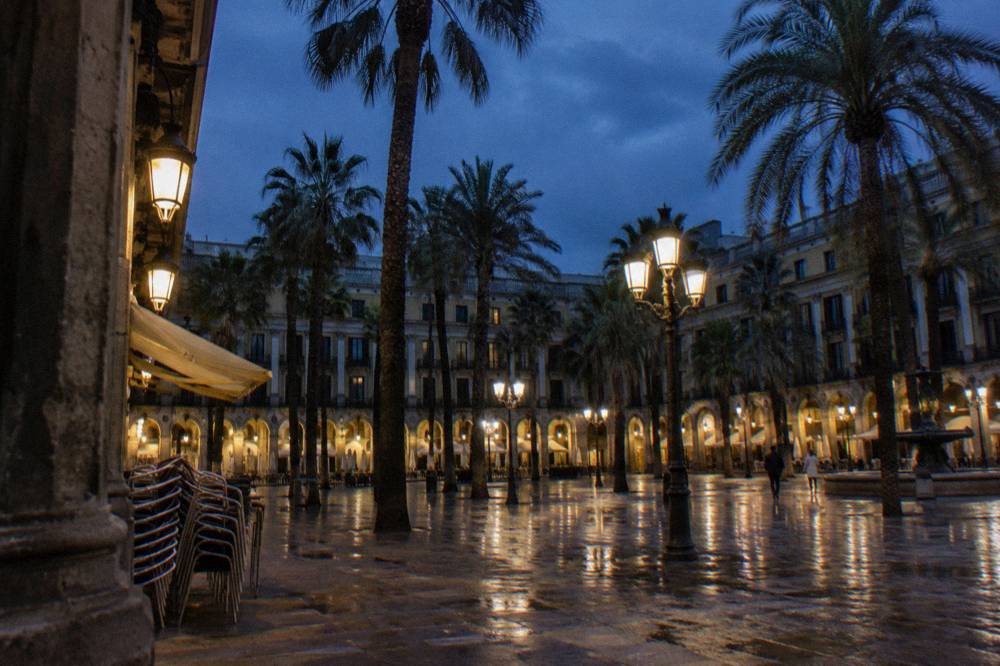
The pattern to notice is that the squares are not just free sights, they are the infrastructure of the free walking tours. Almost every free walking tour listed here names a square or a named landmark as its meeting point, and around La Rambla those points cluster at Plaça de Catalunya, on La Rambla at Canaletes, and at squares like Plaça Reial and Plaça de Garriga i Bachs. The city's open public space records, which the Barcelona city site carries, list these squares with no entry conditions.
A reasonable free loop, using only the facts above: start at Plaça de Catalunya, walk La Rambla as far as the Boqueria, walk through the market without buying anything if you choose, continue to Plaça Reial, then cut east into the Barri Gòtic to Plaça del Pi. Every step of that loop is free public space, and a free GuruWalk walk can be dropped onto any leg of it.
“Fantastic tour with Paula!!! My friend and I had an excellent experience learning about Barcelona and seeing some beautiful landmarks. The tour route was very intentional and Paula is very entertaining. Paula also sends out a personal list of her favorite spots, so I can't wait to come back to Barcelona and try all of her wonderful recommendations.”
How Do The Squares And The Pay-What-You-Want Walks Fit Together?
The squares around La Rambla do double work: they are free public space in their own right and they are the meeting infrastructure for the free, pay-what-you-want walks on GuruWalk. Plaça de Catalunya is the recurring start, named by walks across the Gothic Quarter And Old Town, Dark History And Legends, Gaudí And Sagrada Família and Raval, Poble-sec And Hidden Barrios categories, and walks also start at La Rambla, Canaletes, La Rambla, Plaça Reial, La Rambla, Liceu, and Plaça de Garriga i Bachs. That clustering means a walker can stand in free public space, join a free walk, and end the walk back in free public space, with no ticket at any stage.
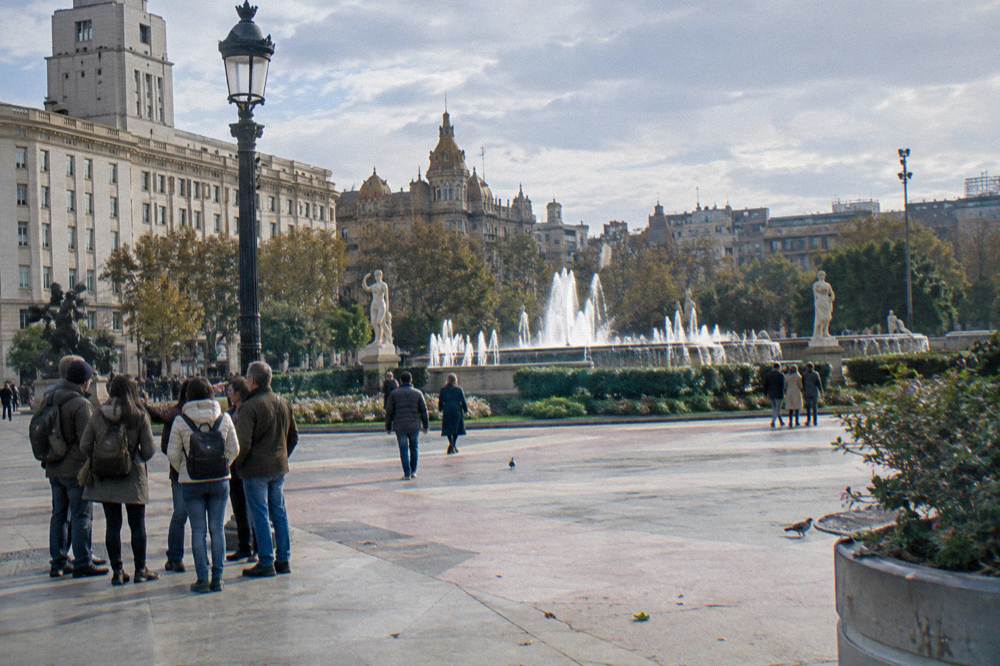
The practical consequence is that the squares set the shape of a free day. Start at Plaça de Catalunya, where the Ramblas to Gaudí Highlights and the Gothic Quarter and El Born Intro both begin, and finish the walk in streets that are themselves free public space. Swap to a walk that meets at La Rambla, Canaletes, such as the Civil War and Franco History Walk, or the Theatrical Gothic Legends, Spanish, which meets at La Rambla, Plaça Reial. The square and the promenade are both free, the walk is free, pay what you want, reserved on GuruWalk, and the walker decides what to give the guide, with no amount set.
Language and duration are the facts that separate these walks. The Ramblas to Gaudí Highlights runs 2 hours 15 minutes in English and Spanish; the Gothic Quarter and El Born Intro runs 2 hours in English and Spanish; the Theatrical Gothic Legends runs in Spanish; the Catalan-Language Old Town Tour runs in Catalan and Spanish. Some walks' GuruWalk pages flag costs beyond the tip, for example an entry ticket inside the walk, and those pages carry the details.
“A fantastic tour which really helped us understand the complexities of The Spanish Civil War. Especially interested in the current national view of the war with no museum to recognize it and hesitancy of the mass grave investigations.”
What Do You Pay For Nearby?
The paid items near La Rambla are interiors and timed attractions: the Barcelona Cathedral's tourist visit, the Santa Maria del Mar cultural visit at EUR 8, and the ticketed sites of the Eixample and the hills beyond. La Rambla, the squares and the market halls stay free. The honest rule is that the street is free, the view from the street is free, and going inside is what costs money.
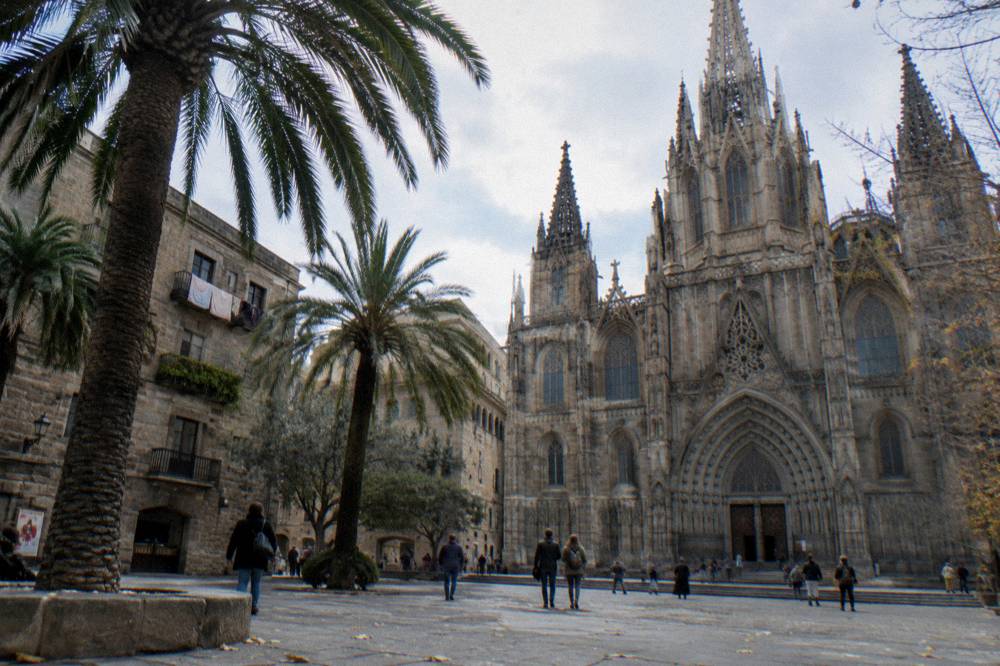
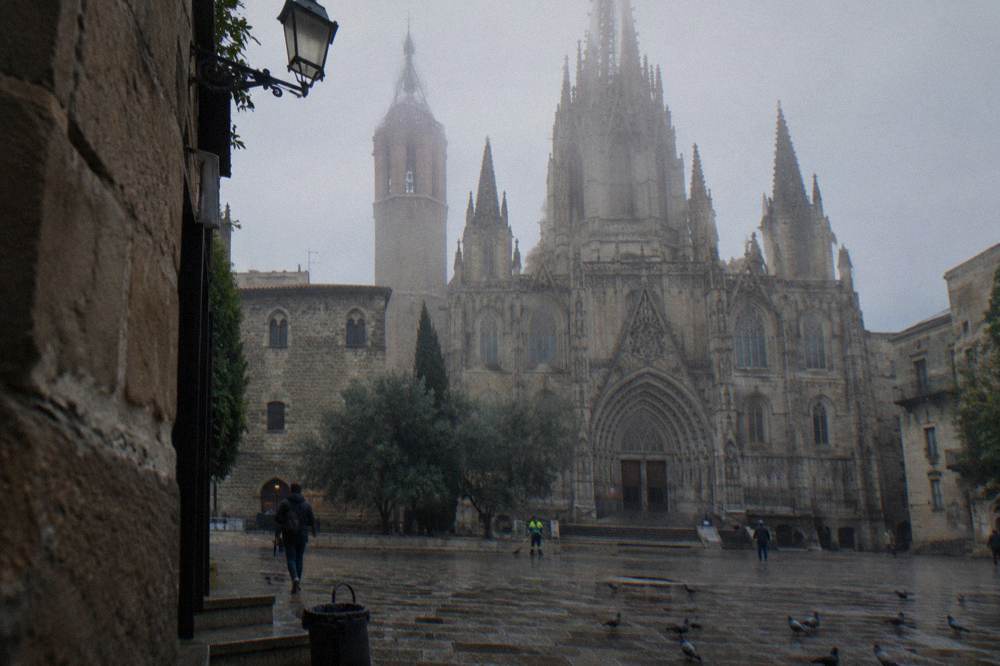
The cathedral is the one that catches people, because its entry is conditional. The only accurate way to state it: entry is free outside the paid tourist-visit hours, and worship is free. The tourist visit is a paid programme with its own schedule, so "the cathedral is free" is never a safe sentence; the fuller treatment is in is Barcelona Cathedral free. Santa Maria del Mar, east of the promenade in the Born, is free outside its paid cultural-visit hours; that visit, EUR 8, covers the interior, towers, roof terraces and crypt and runs Monday to Saturday 10:00 to 18:00 and Sunday 13:00 to 18:00, so entry is free outside those hours. The details live in the El Born and Santa Maria del Mar guide.
Further out but still part of most La Rambla-centred plans: the Sagrada Família's facades can be seen from the street free while the interior needs a timed ticket, general EUR 26, students and under-30s EUR 24, seniors EUR 21. Park Güell's Monumental Zone is paid, general EUR 18 with timed tickets, with free entry only for children 0 to 6, Targeta Rosa holders, people with disabilities and resident or Passi Verd card holders, and a ticket is still required. Casa Batlló, La Pedrera and the other modernista interiors charge admission and no price is stated for them here. The full splits are laid out in free versus paid Barcelona sights.
| Item near La Rambla | Free part | Paid part |
|---|---|---|
| La Rambla | The whole street, always | None |
| Mercat de la Boqueria | Walking through the market | Whatever you buy |
| Plaça de Catalunya, Plaça Reial, Plaça del Pi | The squares, always | None |
| Barcelona Cathedral | Entry outside paid tourist-visit hours; worship | Tourist visit |
| Santa Maria del Mar | Entry outside 10:00 to 18:00, Sun 13:00 to 18:00 | Cultural visit EUR 8 |
| Walking tours | Every walk, pay what you want | Nothing, by definition |
Museums round out the picture. Fifteen city museums are free for everyone on the first Sunday of the month, with booking required at Museu Picasso and CCCB, and about a dozen venues are also free every Sunday from 15:00, though windows differ per venue and Museu Picasso is not free on ordinary Sunday afternoons. MACBA, the contemporary art museum near the Raval end of La Rambla, is free only on Saturday from 16:00 to 20:00. Those schemes are covered in the free museums in Barcelona guide.
The money question, asked honestly, is not "can Barcelona be done free" but "which parts of this walkable core ask for a ticket". Around La Rambla the answer is short: the interiors of two churches, the market stalls if you choose to buy, and everything you can see from the street without a gate in front of it.
Which Nearby Museum Windows Cost Nothing?
The museum splits near La Rambla run on three different rhythms, and mixing them up is what makes people pay when they need not. Fifteen city museums are free for everyone on the first Sunday of every month, not residents only, with booking required at Museu Picasso and CCCB. About a dozen venues are also free every Sunday from 15:00, and the windows differ per venue, so the venue's own window is the one that counts.
| Venue | Free window | Condition |
|---|---|---|
| Museu Picasso | First Sunday of the month; Thursday 16:00 to 19:00 (29 Sep to 29 Mar); Thursday to Saturday 19:00 to 21:00 (31 Mar to 27 Sep) | Prior online booking required |
| MACBA | Saturday 16:00 to 20:00 | Does not use the Sunday scheme |
| MNAC | First Sunday 10:00 to 15:00; Saturday from 15:00 | Two separate windows |
| CCCB | Sunday 15:00 to 20:00 | Online booking required |
| Museu del Disseny | Every Sunday from 15:00 | Window stated only this way |
MACBA is the one that catches people, because it sits in the Raval, on the La Rambla side of the neighbourhood, and its Saturday slot is its only free window. It does not use the Sunday scheme at all, so a Sunday-afternoon plan built around the about-a-dozen venues leaves MACBA out. Its general ticket price is not stated here; what is stated is the free Saturday slot from 16:00 to 20:00.
Museu Picasso is the mirror-image trap. It is free on the first Sunday with prior online booking, and it also has Thursday slots with booking, Thursday 16:00 to 19:00 from 29 September to 29 March and Thursday to Saturday 19:00 to 21:00 from 31 March to 27 September. It is not free on ordinary Sunday afternoons, so it does not belong in the free-Sunday-afternoon list even though other venues do. A first-Sunday plan in Barcelona can therefore combine the cathedral's own free-entry hours outside its paid tourist visit, a free museum with booking, and a pay-what-you-want GuruWalk walk, and the only money in the day is what the walker chooses to give the guide.
Mistakes That Trip People Up Around La Rambla
The recurring mistakes are all boundary errors: treating La Rambla itself as a ticketed attraction, calling the cathedral free without its condition, assuming the market hall carries an entry charge, and mixing up the free hill with the paid lift on trips that push out toward Montjuïc. Each one comes from a real condition in the records, and each has a one-line fix. A free walk covers this ground: Civil War and Franco History Walk.
The first mistake is the cathedral one. Writing "the cathedral is free" into a plan fails the moment the tourist visit is running, because entry is free only outside those hours and worship is free. The fix is to carry the condition in the same sentence every time you note it. The same structure applies to Santa Maria del Mar: free outside the cultural-visit hours, EUR 8 inside them.
The second is assuming the Boqueria charges entry. It does not; markets in Barcelona are free to walk through and you pay only for what you buy, which also holds for Sant Antoni and Santa Caterina further out. The opposite error also happens: expecting free food inside a free market. The hall is free, the stalls sell at stall prices.
The third is the free-hill, paid-lift trap when a La Rambla day stretches to Montjuïc. Montjuïc hill and park are free while the castle and the Teleféric de Montjuïc cable car are separate, with the cable car return at EUR 17.10 online and winter hours to 18:00. Castell de Montjuïc is free on Sundays from 15:00 and on the first Sunday of the month, open daily 10:00 to 18:00 from 1 November to 28 February, closed 25 December and 1 January. The Montjuïc for free guide carries the full split.
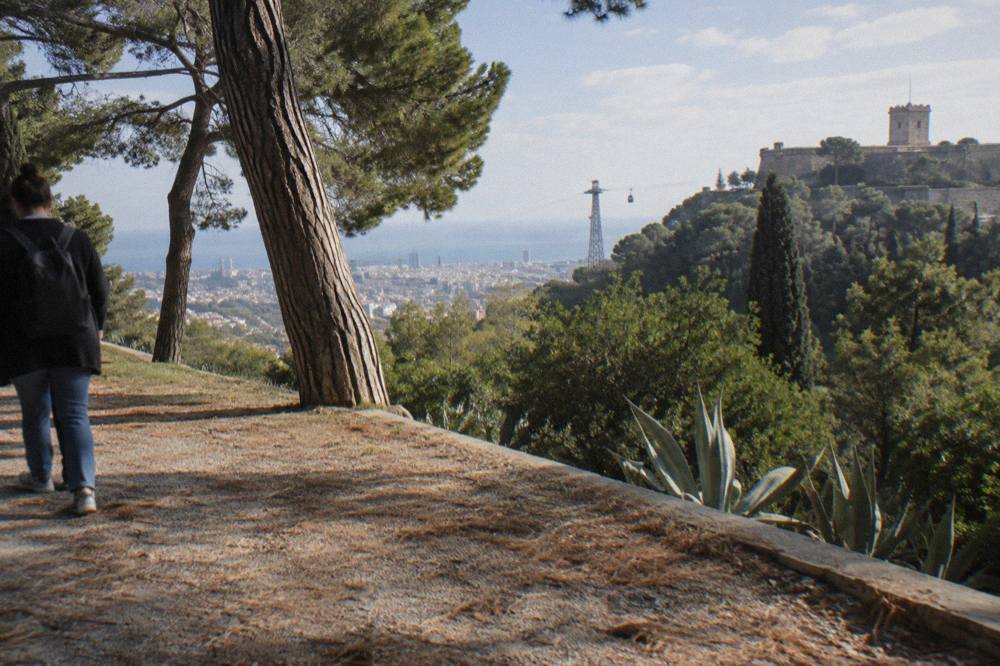
The fourth is timing a viewpoint badly. The Bunkers del Carmel are free but fenced and gated, open 09:00 to 17:30 from 1 October to 30 April and 09:00 to 19:30 from 1 May to 30 September, closed outside those hours, which rules out a winter sunset visit; the details are in the Bunkers del Carmel guide. The Magic Fountain's shows are free to watch from the plaza, but in winter, 1 November to 31 March, they run only Thursday, Friday and Saturday 20:00 to 21:00 with choreographies at 20:00 and 20:30, and after the maintenance stop of 1 to 15 November 2026 they restart on 19 November 2026. It never runs every night in winter.
The last mistake is forgetting that the walks themselves are the cheapest structured option in the city. Every walk listed here is free, pay what you want, reserved on GuruWalk, and the walker decides what to give the guide; no amount is set or suggested on this site. A day built on the squares, the market halls and one free walk costs whatever you decide it costs.
If La Rambla is your base and you want the wider picture of what the city gives away, the Free Things To Do In Barcelona home page is the index for it, and the trio below are three more free walks that work from the same starting points.
Common Questions On This Topic
Is The Boqueria Free To Enter?
Yes. Markets in Barcelona, including the Boqueria, are free to walk through and you pay only for what you buy. The market hall, the fish counters and the fruit stalls are all visible without spending anything, and there is no entry charge or gate.
Is The Gothic Quarter Free To Walk?
Yes, the Barri Gòtic is a neighbourhood of ordinary public streets and squares with no gate or ticket. La Rambla sits on its western edge, and the free walking tours that cover it are free, pay what you want, reserved on GuruWalk.
Is Barcelona Cathedral Free?
Entry is free outside the paid tourist-visit hours, and worship is free. The tourist visit is a separate paid programme, so the cathedral is never simply free in the way a public square is. Carry the condition with the claim.
Are The Squares Off La Rambla Free?
Yes. Plaça de Catalunya, Plaça Reial and Plaça del Pi are free public space with no entry conditions, and they double as meeting points for many of the free GuruWalk walks listed here.
Do The Free Walking Tours Near La Rambla Cost Anything?
No. Every walk is free, pay what you want, reserved on GuruWalk. The walker decides what to give the guide, and no amount is set. Some walks flag costs beyond the tip, such as an entry ticket inside the walk, and their GuruWalk pages carry those details.
Is Santa Maria Del Mar Free To Enter?
Entry is free outside the paid cultural-visit hours. That visit, EUR 8, covers the interior, towers, roof terraces and crypt, and runs Monday to Saturday 10:00 to 18:00 and Sunday 13:00 to 18:00. Outside those hours the church is free.